
VOTE YES ON 87!
97% of colorado taxpayers
Get a tax cut
With Amendment 87 — the Income Tax Fairness Act, giant corporations and households earning over $500,000 pay their fair share for our schools, health care, and child care.


-Where We Are-

February 2026
Ballot Title Language is Set

March-July 2026
Signatures Collected Across Colorado

August 2026
Signatures Submitted

September 2026
We’re on the Ballot!

November 2026
Vote YES on 87!
NO on Prop 136
A Fair Tax Plan That Works for Colorado
AMENDMENT 87 — THE INCOME TAX FAIRNESS ACT, is a tax cut for 97% of Colorado taxpayers including seniors, veterans, and most small businesses and local restaurants.
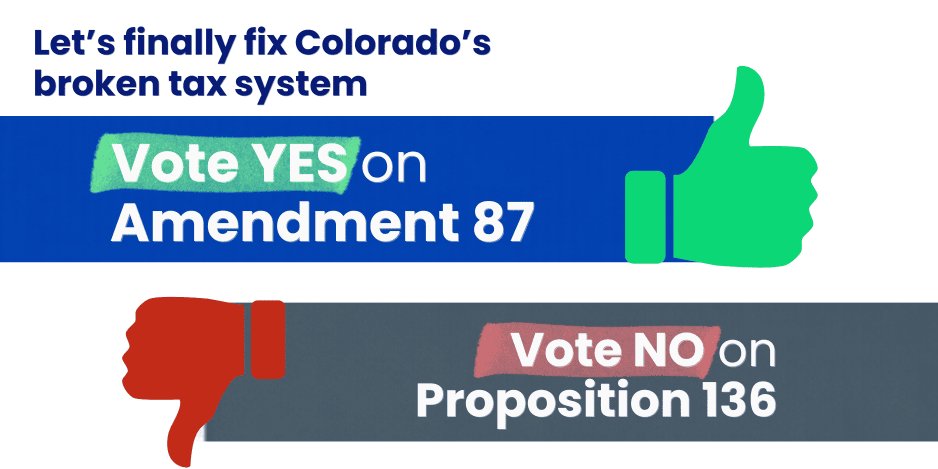

YES on 87 | NO on Prop 136
We’re bringing fairness to our tax code and protections for Colorado’s future.
Vote YES on 87 and NO on 136!
Tax Fairness
Under our current state tax code, nurses, teachers, working families, and small businesses pay the exact same income tax rate as millionaires and giant corporations. That’s not right, and it’s why Colorado’s education, health care, and child care budgets keep getting cut.
Real Accountability
100% of the funds from the proposal are constitutionally restricted to fund only K-12 schools, health care, and child care, with an annual, independent public audit to ensure politicians can’t use this money for anything else
What It Funds
Smaller class sizes and better teacher pay, so Colorado can keep good teachers in the classroom. Health care and child care that families can actually afford, at a time when billions have been cut from these budgets. Every dollar goes to K-12 education, health care, and early child care, the same services Colorado communities have been asking for.
TAX CALCULATOR
Tax Calculator
How Would Income Tax Fairness Work for you??
Enter your annual Colorado taxable income to compare what you pay today with what you'd pay under Amendment 87 — the Income Tax Fairness Act
Your effective tax rate will be: 4.4%
Current flat tax
$0
4.4%
With Amendment 87
$0
Estimate
$0
97% of Coloradans are expected to pay less.
*How is this calculated?
* For individual taxpayers, Colorado taxable income is calculated by subtracting your deductions from your federal adjusted gross income. For 2027, the standard deduction is $15,750 for single filers and $31,500 for married joint filers. Pursuant to the passage of Proposition MM, taxpayers earning more than $300,000 are subject to a maximum deduction of $1000 for single filers and $2000 for joint filers.
For owners of businesses that file as passthroughs (S-Corps, LLCs, etc), the Colorado taxable income calculation should include total annual take-home pay (salary plus share of profit) minus allowable deductions.
For C-corps, the change in annual corporate tax can be calculated by plugging annual Corporate net income into the “Annual income” field above.
Who We Are
We are a coalition committed to a fair and thriving Colorado. Amendment 87 — the Income Tax Fairness Act. Is designed to reduce taxes for 97% of Coloradans while locking in investments to schools, childcare, healthcare, and communities across the state.
TRANSPARENCY MATTERS
Read Amendment 87
Ballot Language
Ballot Title Setting Board
2025-2026
The title as designated and fixed by the Board is as follows:
State taxes shall be increased $2.7 billion annually, in order to increase or improve levels of public services, including K-12 public school education, health care, and early child care and education services, by an amendment to the Colorado Constitution and a change to the Colorado Revised Statutes repealing existing law and creating new law to replace the uniform state income tax rate with a graduated income tax structure, and, in connection therewith, amending the Taxpayer’s Bill of Rights to eliminate the constitutional requirement for all taxable net income to be taxed at one rate with no added tax on income; establishing various income tax rates based on the amount of taxable income earned by individuals, estates, trusts, and corporations, while maintaining the current 4.4% tax on income from the sale of a principal residence, which will result in the estimated change in income taxes owed by individuals as identified in the following table; and authorizing the state to retain and spend any increased revenue from the new tax structure, as a voter-approved revenue change, to supplement current levels of funding for K-12 public school education, health care, and early child care and education programs:
Initiative 195
Change in Income Taxes Owed by Income Category
| Income Categories | Current Average Income Tax Owed |
Proposed Average Income Tax Owed |
Proposed Change in Average Income Tax Owed if Passed + or – |
|---|---|---|---|
| $25,000 or less | $59 | $50 | -$9 |
| $25,001 – $50,000 | $751 | $632 | -$119 |
| $50,001 – $100,000 | $1,877 | $1,666 | -$210 |
| $100,001 – $200,000 | $4,126 | $3,828 | -$298 |
| $200,001 – $500,000 | $9,344 | $9,019 | -$325 |
| $500,001 – $1,000,000 | $19,288 | $18,963 | -$325 |
| $1,000,001 – $2,000,000 | $29,432 | $34,196 | +$4,764 |
| $2,000,001 – $5,000,000 | $41,196 | $55,110 | +$13,914 |
| Income categories use adjusted gross income reported to the federal Internal Revenue Service. | |||
The ballot title and submission clause as designated and fixed by the Board is as follows:
Shall state taxes be increased $2.7 billion annually, in order to increase or improve levels of public services, including K-12 public school education, health care, and early child care and education services, by an amendment to the Colorado Constitution and a change to the Colorado Revised Statutes repealing existing law and creating new law to replace the uniform state income tax rate with a graduated income tax structure, and, in connection therewith, amending the Taxpayer’s Bill of Rights to eliminate the constitutional requirement for all taxable net income to be taxed at one rate with no added tax on income; establishing various income tax rates based on the amount of taxable income earned by individuals, estates, trusts, and corporations, while maintaining the current 4.4% tax on income from the sale of a principal residence, which will result in the estimated change in income taxes owed by individuals as identified in the following table; and authorizing the state to retain and spend any increased revenue from the new tax structure, as a voter-approved revenue change, to supplement current levels of funding for K-12 public school education, health care, and early child care and education programs?
Initiative 195
Change in Income Taxes Owed by Income Category
| Income Categories | Current Average Income Tax Owed |
Proposed Average Income Tax Owed |
Proposed Change in Average Income Tax Owed if Passed + or – |
|---|---|---|---|
| $25,000 or less | $59 | $50 | -$9 |
| $25,001 – $50,000 | $751 | $632 | -$119 |
| $50,001 – $100,000 | $1,877 | $1,666 | -$210 |
| $100,001 – $200,000 | $4,126 | $3,828 | -$298 |
| $200,001 – $500,000 | $9,344 | $9,019 | -$325 |
| $500,001 – $1,000,000 | $19,288 | $18,963 | -$325 |
| $1,000,001 – $2,000,000 | $29,432 | $34,196 | +$4,764 |
| $2,000,001 – $5,000,000 | $41,196 | $55,110 | +$13,914 |
| Income categories use adjusted gross income reported to the federal Internal Revenue Service. | |||
Hearing January 21, 2026
Single subject approved; staff draft amended; titles set (3-0).
The Board finds that the proposed initiative only repeals, in whole or in part, a provision of the state constitution and therefore does not require a 55% majority for passage.
Board members: Theresa Conley, Christy Chase, Kurt Morrison
Hearing adjourned 12:24 PM.
Rehearing February 4, 2026
Motions for rehearing (Fields, Menten, Sopkin, Hancock) denied in their entirety (2-1, Morrison).
Motion for rehearing (proponents) granted to the extent reflected in the change to the title (3-0).
The Board finds that the proposed initiative only repeals, in whole or in part, a provision of the state constitution and therefore does not require a 55% majority for passage.
Board members: Theresa Conley, Christy Chase, Kurt Morrison
Hearing adjourned 12:08 PM.
* Unofficially captioned “Graduated Income Tax” by legislative staff for tracking purposes. This caption is not part of the titles set by the Board.
We believe in tranparency and accountability. Read the full initiative language filed with the State of Colorado.